
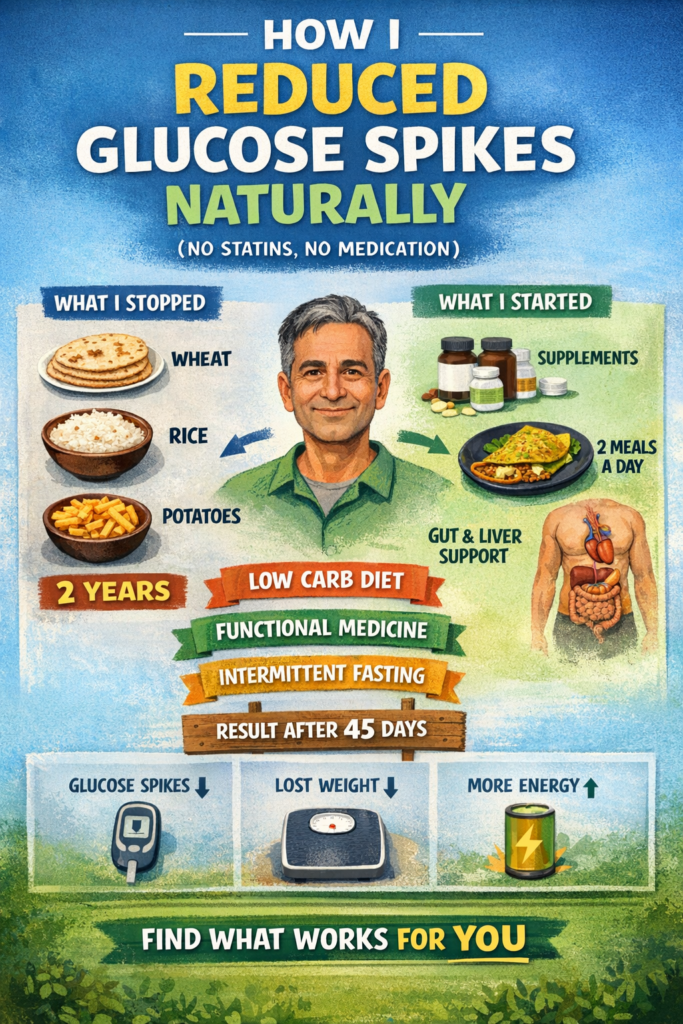
I stopped eating wheat, rice, and potatoes almost two years ago. Yet my glucose spikes were still happening. That’s when I realized something uncomfortable: what we call “healthy eating” is often just generic advice that may not actually work for your body. So I decided to dig deeper.
A while ago I wrote about my War on Diabetes. At that time I was doing everything people usually recommend:
- eating “healthy”
- cutting sugar
- exercising
Yet something didn’t add up. My weight was barely moving and my glucose spikes were still there. This is when my doctor at KP suggested the standard path.
- Take statins.
- Start Lipitor.
Now before anyone gets upset — medications absolutely help many people. But I wasn’t ready to jump there yet.
If lifestyle caused the problem… shouldn’t lifestyle fix it?
So I decided to try everything possible before going down the medication route.
The Part Most People Don’t Know
For almost two years now, I have already been avoiding the usual suspects:
- Wheat (roti, naan, aloo paranthas)
- Rice
- Potatoes
Yes. Two years. Not two weeks. Not a January resolution. Two years. Sure, there were a few cheat days here and there. I’m human. But overall, those foods have mostly been out of my life. And yet… My glucose spikes still happened.
Just removing carbs is not always enough.
HbA1c History :
| Date | HbA1c | Normal Range |
|---|---|---|
| Jan 21, 2026 | 6.2% | ≤ 5.6% |
| Jan 14, 2026 | 7.0% | ≤ 5.6% |
| Dec 4, 2025 | 6.7% | ≤ 5.6% |
| Jan 23, 2025 | 6.3% | ≤ 5.6% |
| Jul 31, 2024 | 7.1% | ≤ 5.6% |
| Jul 6, 2023 | 6.5% | ≤ 5.6% |
| Mar 9, 2023 | 6.9% | ≤ 5.6% |
Note: Above data is from before the plan started.
What is Functional Medicine?
For those who haven’t heard of it before, functional medicine is an approach that focuses on identifying the root causes of health issues rather than only treating symptoms. Instead of just prescribing medication for things like high glucose or cholesterol, functional medicine doctors often look at:
- gut health
- inflammation
- liver function
- nutrient deficiencies
- hormone balance
- lifestyle and diet patterns
The idea is that many chronic conditions — including metabolic issues — are connected to how different systems in the body are functioning together. Based on that analysis, the treatment usually includes a mix of:
- diet changes
- supplements
- lifestyle adjustments
To be clear, this is just the general concept. My experience is still a personal experiment, and I’m continuing to learn what works and what doesn’t.
Enter Functional Medicine
Earlier this year when I went to India, my brother-in-law suggested I meet a functional medicine doctor. To be honest, I was skeptical. Functional medicine sometimes sounds like the place where people start recommending herbs from the Himalayas harvested under a full moon. But I agreed to try. Mainly because the approach was:
- tests
- supplements
- diet changes
No risky procedures. No extreme interventions. Worst case, I waste some money. Best case, something improves.
The Plan
The doctor ran a lot of tests. Based on those, she designed a plan that included:
- supplements
- food restrictions
- meal timing
- gut and liver support
One of the biggest changes was how often I eat. Today I eat: Two meals a day. And probably one-fourth of what I used to eat. Surprisingly:
- I don’t feel weak
- I don’t feel hungry all day
- my energy levels are stable
That alone was a surprise.
What Happened After 45 Days
About 45 days into the program, I started noticing things that had bothered me for years simply disappearing.
Heartburn Gone.
I used to have regular acid reflux. Now I don’t remember the last time I had it.
Inflammation Gone.
My body just feels… calmer. Less bloating. Less heaviness.
Glucose Spikes Reduced.
This is the big one. The post-meal spikes dropped significantly. Foods that used to spike glucose dramatically behave very differently now.
Weight 198 pounds to 183 pounds
With heartburn, inflammation gone loosing some pounds seems really beneficial.
My Simple Daily Diet
I also realized something important. You don’t need complicated recipes. I built a simple repeatable diet that works for me. And yes — I am perfectly fine eating similar things daily.
Typical Meals
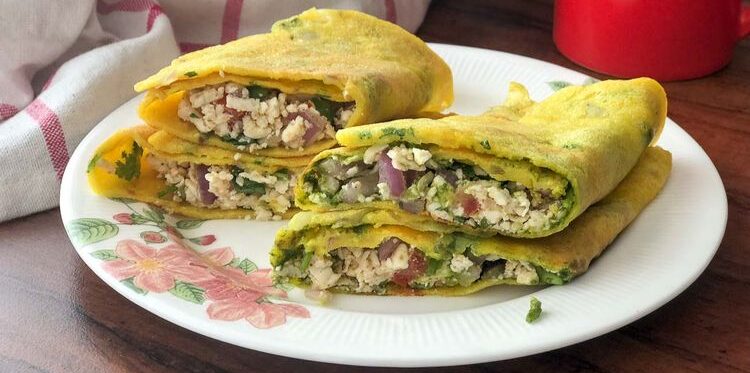
- Moong dal cheela made from soaked mixed whole moong (or other whole daal), Stuffed with homemade paneer Basic spices
- Mixed whole daal sprouts
- Sometimes chicken.
Simple. Easy. Repeatable.
Foods I Avoid
Over the past two years, I removed several foods that are staples in many Indian diets. This was not a temporary experiment. It has now been almost two years of consistently avoiding these foods. Yes, there were a few cheat days, but that’s all.
The biggest eliminations were:
- Wheat (roti, naan, aloo parathas)
- Rice
- Potatoes
In addition to these, the current program also asked me to avoid:
- Tea without milk
- Makhana and nuts
- Eggs
- Oranges
- Bell pepper
- Tomatoes in salad
- Market paneer
- Soya
- Tofu
Giving up wheat and rice — foods that many of us grew up eating every day — was not easy. But over time, the body adapts. And once you start seeing improvements in energy, digestion, and glucose stability, the motivation becomes much stronger.
Foods I Do Eat
The allowed list is actually quite enjoyable:
- Almond milk
- Coconut milk
- A2 Baleno ghee
- Only homemade paneer
- Liver-healthy vegetables/Cruciferous Vegetables: Broccoli, Brussels sprouts, and kale contain compounds that support detoxification enzymes.
- Chicken
- Salads with olive oil
- Berries with curd
- Herbal tea
- Coconut water with chia seeds
- Veggies
- Veggie kebabs
What I Learned
Here is the biggest lesson so far:
Eating “healthy” is not the same as eating what your body needs.
Two people can eat the same food and have completely different metabolic responses. That’s where following matter and makes them different:
- gut health
- liver health
- inflammation
- insulin resistance
What I’ll Share Next
In future posts I’ll share:
- the tests the doctor ran
- the supplements I’m taking
- before and after glucose data
- what actually worked vs what didn’t
Because if you are fighting the same war on diabetes, you deserve more than generic advice like:
Just eat healthy and exercise.
If only it were that simple.
Final Thoughts
For years I kept hearing the same advice:
Eat healthy. Exercise more.
Turns out that advice is about as helpful as telling someone with a broken car:
“Just drive better.”
Sometimes you have to open the hood and figure out what’s actually wrong with the engine.
That’s what this journey has been for me.
- Experimenting.
- Testing.
- Observing what actually works for my body.
And if you’re also fighting your own war on diabetes, maybe the real takeaway is this:
Don’t stop at generic advice.
Keep digging until you find what actually moves the needle.
Disclaimer: This post is based on my personal experience and should not be taken as medical advice. Please consult your doctor or a qualified healthcare professional before making major changes to your diet, supplements, or medications.