
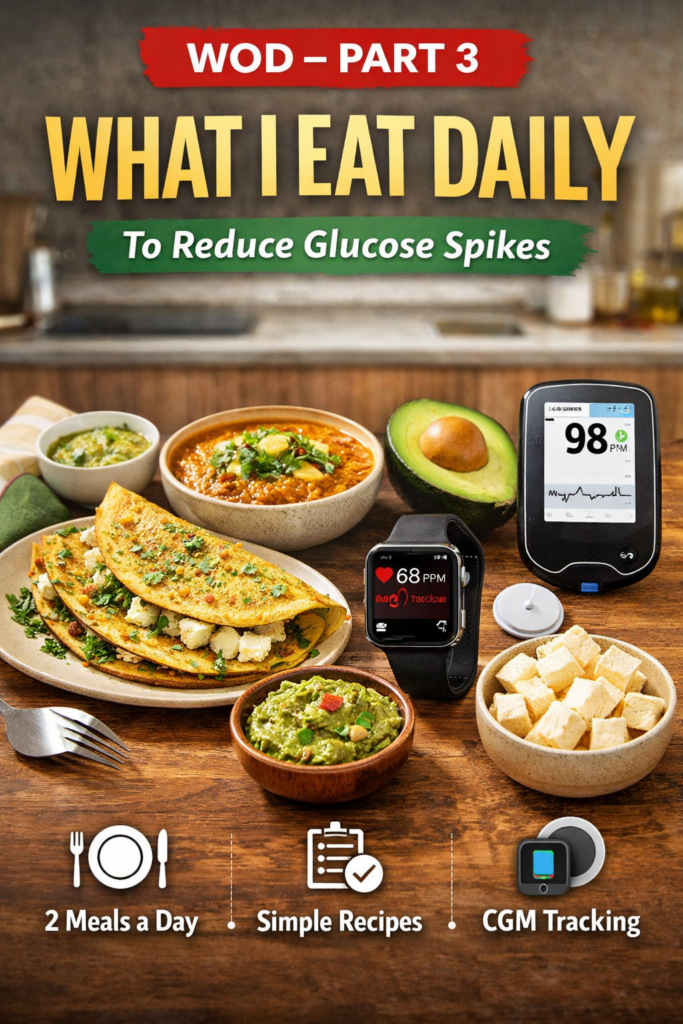
WOD – Part 3: What I Eat Daily (And the Tools That Actually Helped)

After writing Part 2, a lot of people asked me one simple question:
“Okay… but what do you actually eat?”
Fair question.
Because all the theory about diet, functional medicine, and glucose spikes is great…
…but at the end of the day, you still have to stand in your kitchen and decide:
“Aaj kya khana hai?” 😄
So this post is exactly that.
No theory.
No gyaan.
Just what I actually eat — and the tools that helped me figure it out.
My Rule: Keep It Simple
I realized early on:
I need to find recipes and the quantity that works for me. Most importantly, keep it simple — else I won’t follow it.
So I built a system where:
- ingredients are simple
- cooking is quick
- I can repeat meals daily
- quantity meets my daily needs
Yes — I am totally okay eating the same thing again and again.
Because the goal is not excitement.
The goal is stable glucose.
How Many Times Should We Eat? 2 or 3 Meals?
This is one of the most common questions I get.
Should we eat 2 times a day?
Or 3 times?
Or even more?
The honest answer is:
It depends on your lifestyle.
Think about our forefathers — many of them were farmers.
Their day looked very different:
- Wake up early
- Go to the farm
- Do physically intensive work
For them, eating 3 meals a day made perfect sense.
They actually earned those meals.
Now compare that to most of us today.
- We sit for long hours
- Work on laptops
- Move very little
So the real question is:
Do we really need the same number of meals?
Maybe this is also why we see:
- fat accumulation
- glucose spikes
- metabolic issues
Maybe we just need to find our number.
What Worked for Me
For me, that number turned out to be: 2 meals a day. No snacking. No grazing all day.
- Meal 1: Breakfast
- Meal 2: Around 3 PM (WFH)
- or 6 PM (office days)
What My CGM Showed Me
This is where the CGM changed everything.
- Fewer meals = fewer glucose spikes
- Less eating = more stable patterns
- More gap between meals = better response
For years we hear:
Eat every few hours.
But my body was telling me:
Or maybe… just stop eating so often. Let the glucose come down.
Recipes I Eat Regularly
1. Moong Dal Cheela + Homemade Paneer
This is my go-to meal.
Ingredients
- Soaked whole moong (or any whole daal)
- Per taste: Salt, Lemon, Green chilli, Ginger
- Stuffing: Crumbled homemade paneer
- Good quality ghee
How I make it
- Grind soaked moong into batter
- Make cheela like dosa
- Stuff with paneer
Why it works
- High protein
- Low glucose spike
- Easy to digest
Repeatable daily.
2. Dal Tadka (With Lot of Ghee)
Simple, comforting, and effective.
Ingredients
- Any whole dal
- Good quality ghee
- Per taste: Salt, Lemon, Cumin, Green chilli
Why it works
- Warm and gut-friendly
- Keeps you full
- Stable energy
3. Guacamole (Desi Style)
Ingredients
- 1 Avocado
- 1/4 White onion
- Salt, Lemon, Green chilli
- Olive oil
Mix everything. Done.
Why it works
- Healthy fats
- No glucose spike
- Quick to make
4. Avocado + Paneer Combo
- 1 Avocado
- Paneer
- Salt, Lemon, Green chilli
- Olive oil
Why it works
- Fat + protein combo
- Very filling
- Zero effort meal
The Tools That Changed Everything
Diet alone didn’t solve it.
Measuring did.
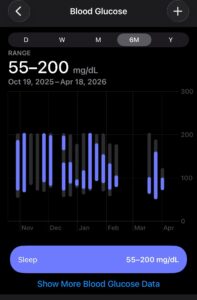
1. Continuous Glucose Monitor (CGM)
- Tracks glucose in real time
- Shows how food actually affects you
Biggest learning:
What I thought was healthy… wasn’t working for my body.
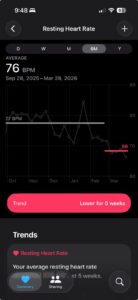
2. Apple Watch
- Resting heart rate: 77 → 68 BPM
- Step tracking
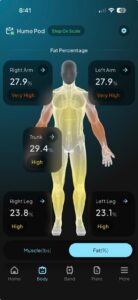
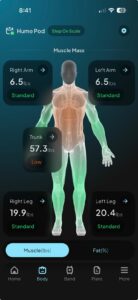
3. Hume Health
- Body fat and muscle
- Visceral fat
Weight alone doesn’t tell the story.
The Real Insight
Quantity and quality matter.
But how your body responds matters more.
- Measure
- Observe
- Adjust
Don’t guess.
If You Want to Start
- Pick 2–3 repeatable meals
- Reduce variety (temporarily)
- Track your response
- Adjust
You don’t need a perfect diet.
You need a working system.
Final Thought
Our forefathers worked in the fields and earned 3 meals.
Most of us sit on chairs and eat like laborers.
Maybe the answer is not more diet rules.
Maybe the answer is finding your number.
For me, that number was 2 meals a day.
Disclaimer: This post is based on my personal experience and should not be taken as medical advice.